What Is PAO and Why Your Skincare Depends On It
Turn over almost any moisturizer, serum or foundation and you will find a tiny drawing of an open jar with a number and the letter M inside it: 6M, 12M, 24M. That is the Period After Opening symbol, usually shortened to PAO. It is the manufacturer's guidance on how many months the product should stay in good condition once you have opened it.
What the numbers mean
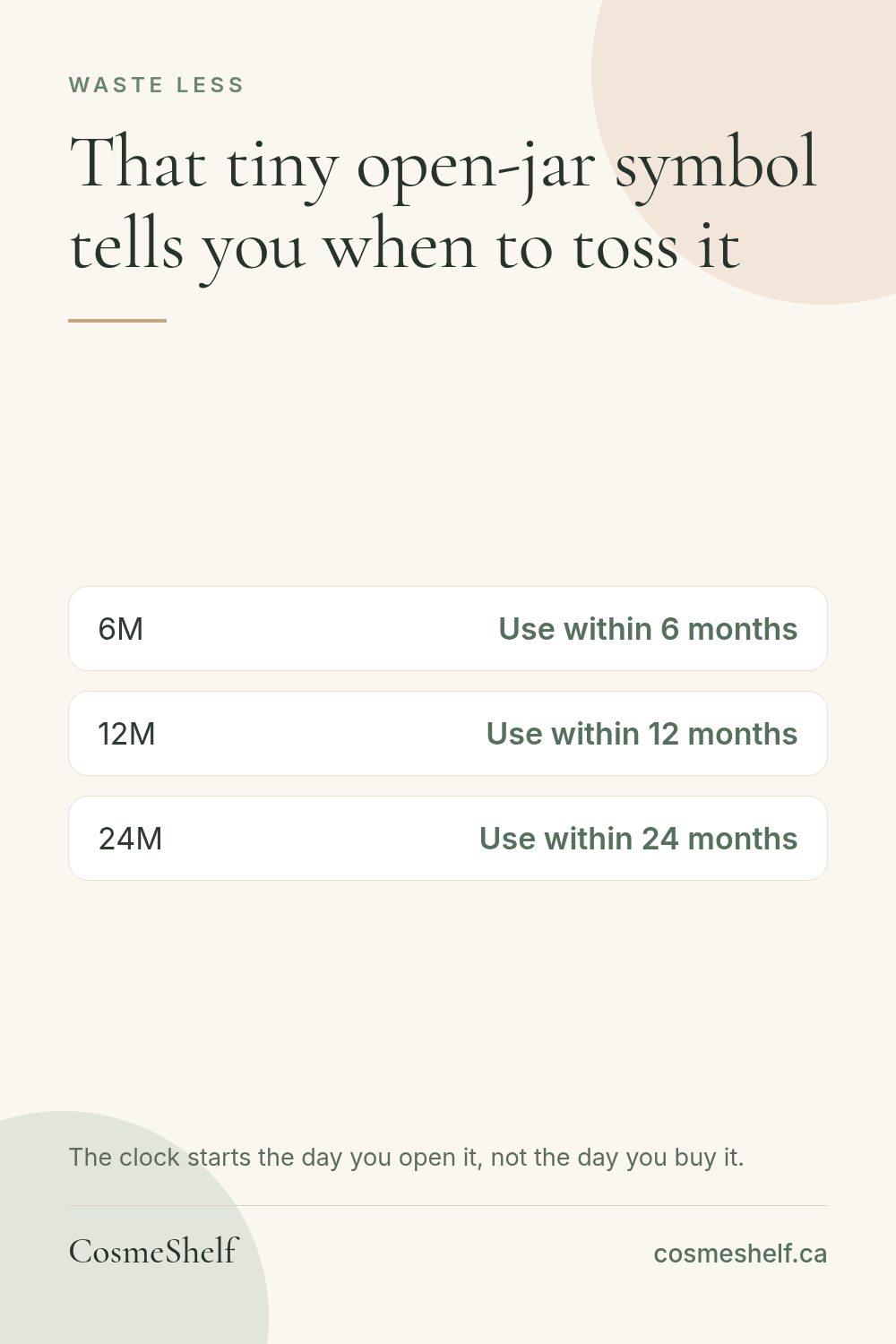
The number is months and the M stands for months. So:
- 6M means use within 6 months of opening.
- 12M means use within 12 months of opening.
- 24M means use within 24 months of opening.
The clock starts the day you first open the product. It does not start on the day you bought it.
Why opening a product changes things
A sealed product is protected from air, light and your fingers. Once it is open, that changes. Air gets in each time you use it. Some active ingredients, vitamin C being a well-known example, can oxidize and become less effective. Products in jars are touched directly, which is one way they can become contaminated over time. Preservatives slow all this down, but they are designed to work for a limited period.
That is why two bottles of the same serum can be in very different states. One that has sat sealed in a cupboard may be fine. The same serum, opened eight months ago with a 6M symbol, is past the period the maker recommends.
PAO is not the same as an expiry date
Some products carry a printed expiry or best-before date as well, or instead. This is the date for the unopened product. In the European Union, products that last more than 30 months unopened do not have to show a best-before date, which is why many of them show only the PAO symbol.
Sunscreen is a common exception. In Canada and the United States it is regulated differently from ordinary cosmetics and normally carries a printed expiry date. Treat that date as the limit, even if you opened the bottle recently.
If a product has both, follow whichever comes first.
Where to find it
Look on the back or bottom of the container, and on the outer box. If the symbol is only on the box and you have thrown the box away, you can often find the PAO on the brand's website. If you cannot find it at all, our guide to how long makeup lasts after opening lists the ranges brands commonly print for each product type.
The hard part is remembering the date
Reading the symbol takes two seconds. Remembering that you opened this cream in March is the real problem, and nobody tracks it on paper for long.
There are a few ways to handle it:
- Write the opening date on the bottom of the product with a marker or a small sticker.
- Keep a simple list in a notebook or a printable tracker.
- Add the product to a CosmeShelf shelf with its opening date and PAO, and let the app show the days left.
Pick whichever one you will keep doing. The habit matters more than the tool.
When to stop using a product early
PAO is guidance for normal use and storage. A product kept in a hot car or a steamy bathroom may turn sooner. If something smells different, has separated, or has changed colour or texture, stop using it even if the date says it is fine. Our list of 10 signs your skincare has expired covers what to look for. And if a product irritates your skin, stop using it and ask a pharmacist, doctor or dermatologist.
Track your skincare with CosmeShelf
Scan, organise, finish. Never waste a bottle again.
Try CosmeShelf free — no account neededKeep reading
10 Signs Your Skincare Has Expired
Smell, texture, colour — your products are sending signals you might be missing.
Waste LessHow Long Does Makeup Last After Opening?
A product-by-product guide to the periods brands commonly print, and how to find the one on your own makeup.
Spend SmarterHow to Stop Buying Beauty Products You Already Own
Three nude lipsticks and two open vitamin C serums. Why duplicates happen and five habits that stop them.