How to Build a Skincare Budget That Actually Works
Most of us could not say what we spent on skincare last month. It is rarely one big purchase. It is a serum here, a replacement moisturizer there, and a sale that felt too good to skip. None of it feels like much until you add it up.
A skincare budget is a way of knowing your number, so you choose what to buy on purpose. Here is a simple way to build one that you will still be using three months from now.
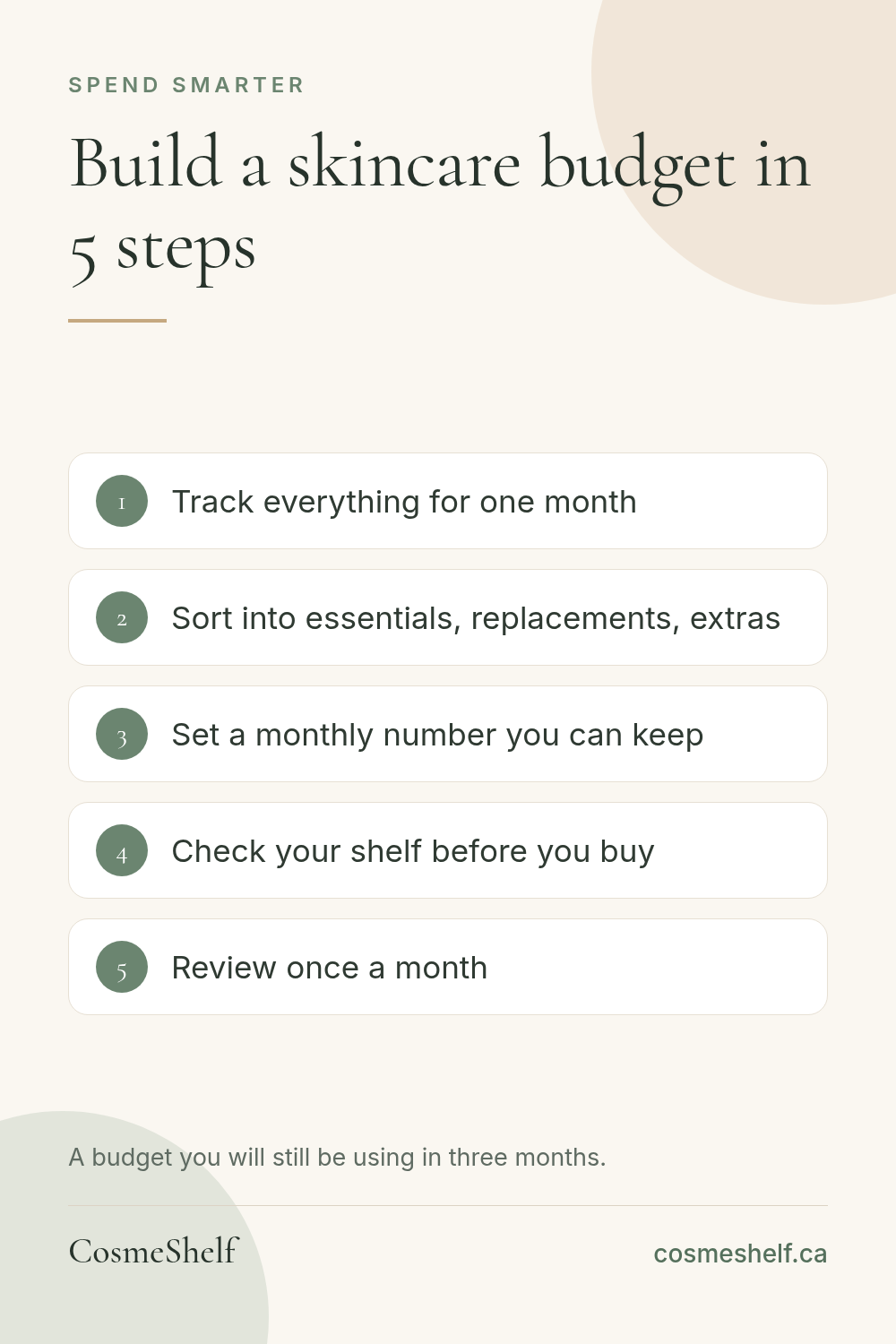
Step 1: Track everything for one month
Before you set a limit, look at what actually happens. For one month, write down every beauty purchase: the drugstore run, the online order, the "just one thing" at the checkout. Include the price and what the product was for.
Do not try to change your habits yet. The point of this month is an honest picture. A note on your phone works. So does a printable planner, or adding each product to your CosmeShelf shelf with the price you paid.
Step 2: Sort what you bought into three piles
At the end of the month, go through the list and mark each item:
- Essentials: the products your routine really depends on, such as cleanser, moisturizer and sunscreen.
- Replacements: something you bought because the last one ran out.
- Extras: things you bought because they were new, on sale, or recommended.
Extras are fine. The useful question is how many of them you have opened and are using. If several are still sealed in a drawer, that is the part of your spending with the most room to change.
Step 3: Set a monthly number you can live with
Add up your essentials and replacements for the month. That is your base. Then decide on a fixed amount for extras and add it on top. The total is your monthly budget.
Make the number realistic. A budget that is too tight gets abandoned in the second week. One that fits your real routine, with a little room for something fun, is the one that lasts.
Step 4: Check your shelf before you buy
This is where most beauty budgets quietly leak. You buy a new vitamin C serum while the open one still has months left. You stock up in a sale, and by the time you reach the third bottle it is past its date.
Before you buy, check two things: do you already own something that does the same job, and will you finish what is open before it expires? If you are not sure how long an open product lasts, our guide to the PAO symbol explains how to read it. And if duplicates are a regular problem for you, see how to stop buying products you already own.
Step 5: Review once a month
At the end of each month, compare what you spent with your number. Keep it to five minutes. Look for one pattern, such as a category that always goes over or a store where you always add extras, and adjust one thing for next month.
What a good month looks like
A good month is one where you used what you bought. You finished a product before opening its replacement. Nothing went in the bin half full. You bought one new thing you were curious about, and you knew it fit.
Spending well on beauty mostly means buying products you will actually use up before they expire. The budget is just the tool that makes that visible.
Track your skincare with CosmeShelf
Scan, organise, finish. Never waste a bottle again.
Try CosmeShelf free — no account neededKeep reading
How Long Does Makeup Last After Opening?
A product-by-product guide to the periods brands commonly print, and how to find the one on your own makeup.
Spend SmarterHow to Stop Buying Beauty Products You Already Own
Three nude lipsticks and two open vitamin C serums. Why duplicates happen and five habits that stop them.
Stay OrganizedHow to Organize Your Skincare and Makeup Collection
A one-afternoon method to sort, store and keep track of everything you own.