Retinol and Vitamin C — Can You Use Both?
Retinol and vitamin C are two of the most talked-about skincare ingredients, and the question of whether they can share a routine comes up constantly. The short answer most skincare professionals give is yes, you can use both. The common advice is to use them at different times of day.
What each one is used for
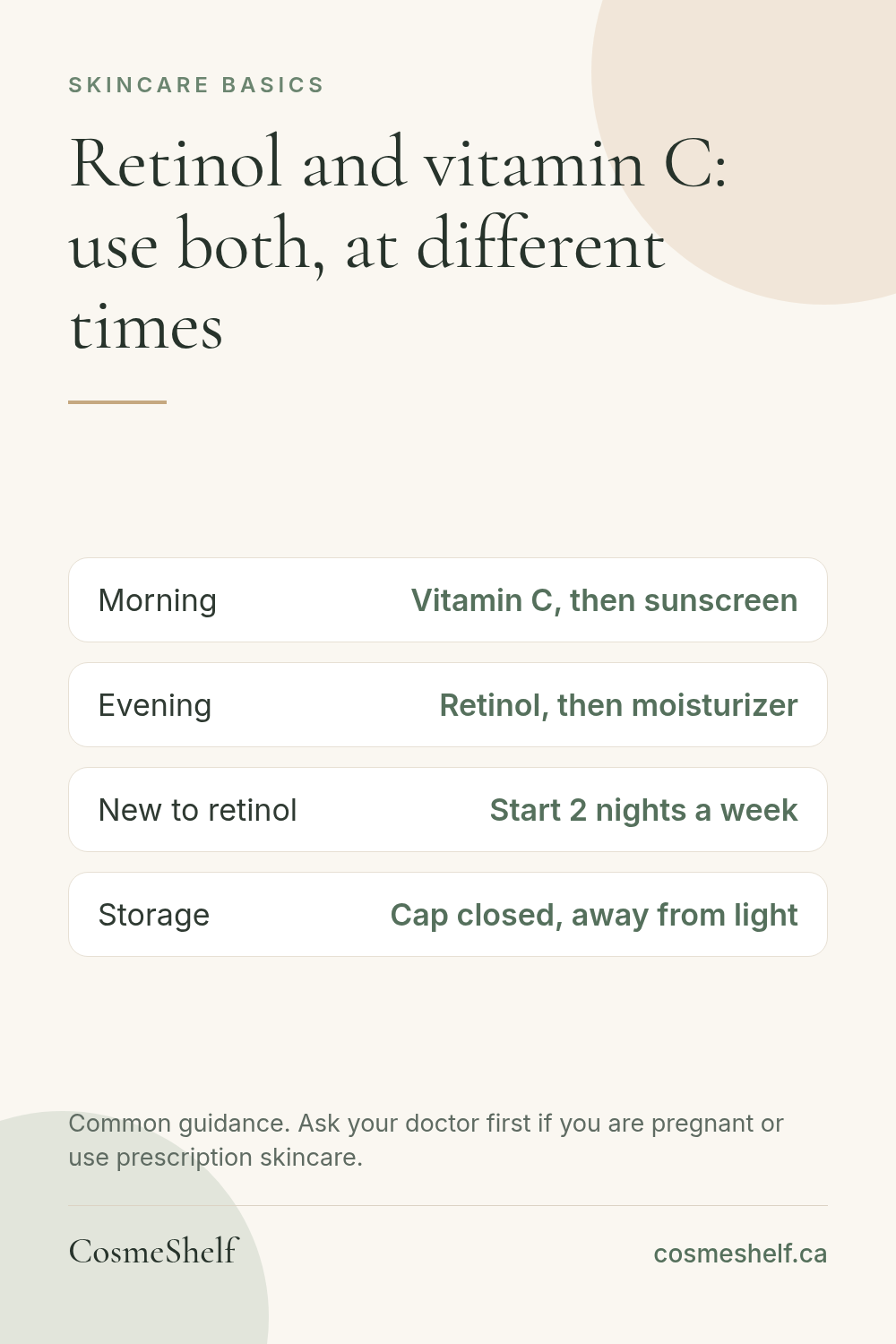
Vitamin C is an antioxidant. People use it in the morning for a brighter, more even-looking skin tone, and it is usually worn under sunscreen.
Retinol is a form of vitamin A. People use it to improve the look of fine lines and skin texture. It is normally used at night, partly because it can break down in sunlight and partly because it can make skin more sensitive to the sun.
Why they are usually split up
You may have read that the two cancel each other out. That idea is widely repeated, but it is not the main reason to separate them. The practical reason is irritation. Both can cause stinging, dryness or redness on their own, especially at higher strengths. Putting both on at once increases the chance your skin will complain.
Splitting them also happens to suit how each one works: vitamin C under sunscreen in the morning, retinol in the evening.
A simple way to use both
- Morning: cleanser, vitamin C serum, moisturizer, sunscreen.
- Evening: cleanser, retinol, moisturizer.
If you are not sure where each product sits among your other steps, see the correct order to layer your skincare.
If you are new to retinol
Start slowly. A common approach is two nights a week at a low strength, increasing only if your skin is comfortable. Some dryness and flaking in the first weeks is common. If it is more than mild, cut back or stop.
Wear sunscreen every morning while you are using retinol. If you are pregnant, breastfeeding or trying to conceive, ask your doctor before using retinol or other vitamin A products. The same goes if you have a skin condition or use prescription skin treatments.
Both go off faster than you would think
This part gets less attention. Vitamin C serums are known for oxidizing once opened. A serum that started clear or pale and has turned dark orange or brown has likely lost much of its effect. Retinol is also sensitive to air and light, which is why it often comes in opaque or airless packaging.
For both, it helps to:
- Close the cap firmly straight after use.
- Store the product away from heat and direct light.
- Note the date you opened it and check the PAO symbol on the packaging.
- Buy one at a time, so a backup is not sitting open and ageing.
An expensive serum that has oxidized on the shelf is one of the most common ways people waste money on skincare. Knowing when you opened it is a small habit that protects the purchase.
Track your skincare with CosmeShelf
Scan, organise, finish. Never waste a bottle again.
Try CosmeShelf free — no account neededKeep reading
How Long Does Makeup Last After Opening?
A product-by-product guide to the periods brands commonly print, and how to find the one on your own makeup.
Spend SmarterHow to Stop Buying Beauty Products You Already Own
Three nude lipsticks and two open vitamin C serums. Why duplicates happen and five habits that stop them.
Stay OrganizedHow to Organize Your Skincare and Makeup Collection
A one-afternoon method to sort, store and keep track of everything you own.